



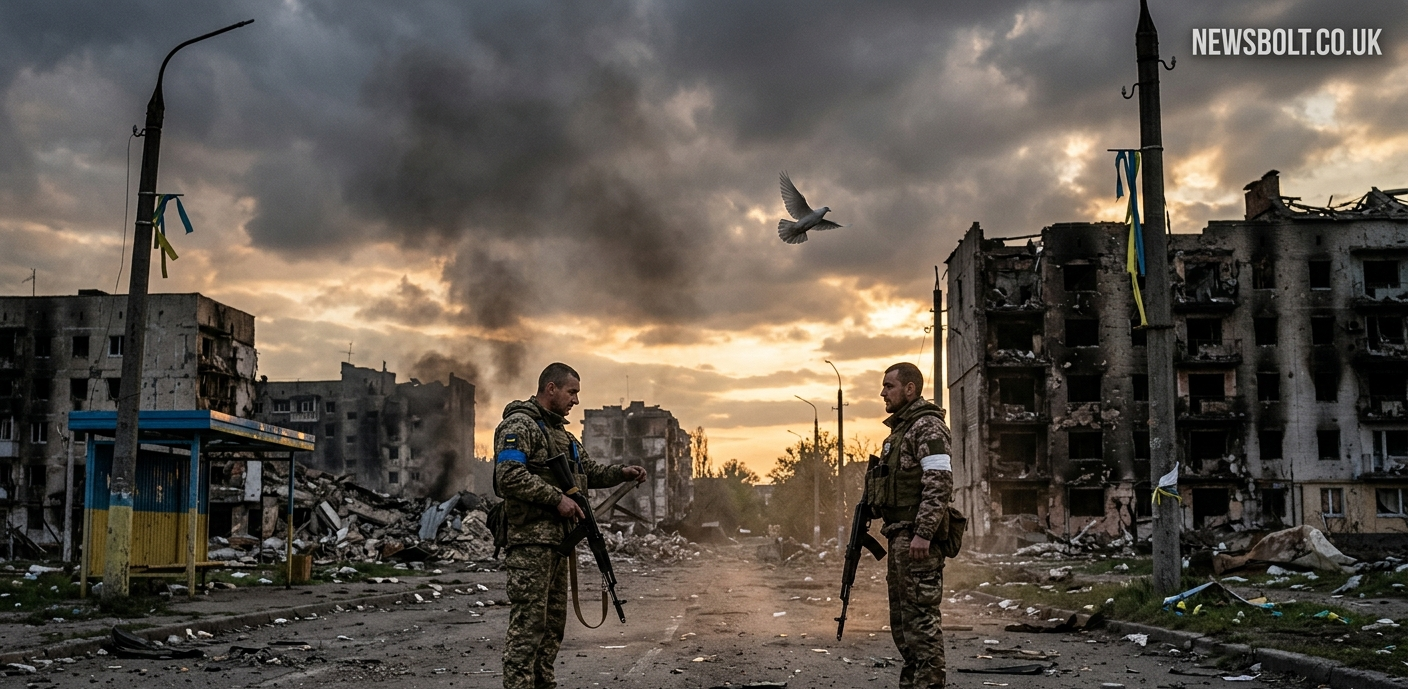
Introduction to the Ukraine Ceasefire Debate
The idea of a Ukraine ceasefire has become one of the most critical topics in global politics since the escalation of the Russia–Ukraine war. As the conflict continues to impact millions of lives and reshape international relations, calls for a ceasefire have intensified from governments, humanitarian organizations, and global leaders. A ceasefire is often seen as the first meaningful step toward ending active hostilities, reducing civilian suffering, and opening the door to long-term peace negotiations.
Despite repeated attempts, achieving a sustainable ceasefire in Ukraine has proven extremely difficult. Temporary pauses in fighting have occurred, but they have rarely lasted long due to deep-rooted disagreements and ongoing military operations. The Ukraine ceasefire discussion is not just about stopping the war; it is about resolving complex political, territorial, and security issues that have developed over years of conflict.
Historical Context of the Russia–Ukraine War
To understand the challenges of a Ukraine ceasefire, it is essential to look at the origins of the conflict. The crisis began in 2014 when Russia annexed Crimea following political unrest in Ukraine. This move was widely condemned by the international community and led to sanctions and diplomatic tensions. At the same time, conflict erupted in the eastern regions of Donetsk and Luhansk, where separatist movements, backed by Russia, clashed with Ukrainian forces.
The situation escalated dramatically in February 2022 when Russia launched a full-scale invasion of Ukraine. The war quickly expanded beyond the eastern regions, affecting major cities and infrastructure across the country. Since then, the conflict has evolved into a prolonged and destructive war, with both sides investing heavily in military operations. This historical backdrop explains why a ceasefire is not simply a matter of stopping fighting but involves resolving years of accumulated tensions.
Understanding What a Ceasefire Means in Ukraine
A ceasefire in the Ukraine context refers to an agreement between Russia and Ukraine to halt military operations, either temporarily or permanently. Such agreements can range from localized pauses for humanitarian purposes to broader nationwide arrangements aimed at initiating peace talks. However, not all ceasefires are equal; some are fragile and short-lived, while others can lead to more stable outcomes.
In Ukraine, ceasefires have often been limited in scope and duration. For example, temporary truces during religious holidays or humanitarian operations have been attempted, but violations have been frequent. The complexity of the battlefield, combined with the involvement of multiple military units and external support, makes it challenging to enforce ceasefire terms effectively.
Recent Developments in Ukraine Ceasefire Efforts
In 2026, renewed discussions around a Ukraine ceasefire have brought cautious optimism. Temporary agreements, including short-term pauses in fighting during significant religious events, have demonstrated that both sides can engage in dialogue under certain conditions. These developments have been seen as small but important steps toward broader negotiations.
However, these ceasefires have often been undermined by mutual accusations of violations. Both Russia and Ukraine have reported breaches involving artillery strikes, drone attacks, and troop movements. These incidents highlight the fragile nature of ceasefire agreements and the difficulty of maintaining trust between the two sides. While progress has been made in initiating dialogue, sustaining a ceasefire remains a major challenge.
Key Obstacles to a Lasting Ceasefire
One of the primary obstacles to a lasting Ukraine ceasefire is the issue of territorial control. Russia claims several regions in eastern and southern Ukraine, while Ukraine insists on restoring its full sovereignty over these territories. This fundamental disagreement makes negotiations extremely complex, as neither side is willing to make significant concessions.
Another major challenge is the lack of trust. Previous ceasefires have frequently collapsed due to violations, leading both sides to doubt the sincerity of future agreements. Additionally, security concerns, including fears about future attacks and military positioning, play a significant role in shaping each side’s stance. Without strong enforcement mechanisms and guarantees, it is difficult to establish a ceasefire that both parties will respect.
Role of Global Powers and International Mediation
International involvement has been a key factor in Ukraine ceasefire efforts. Countries such as the United States, members of the European Union, and regional powers like Turkey have played active roles in mediating discussions and facilitating negotiations. Organizations like the United Nations have also called for ceasefires to address humanitarian concerns.
Despite these efforts, geopolitical tensions have often complicated mediation attempts. Different countries have their own strategic interests, which can influence their approach to the conflict. While some nations prioritize a quick ceasefire to reduce global instability, others focus on long-term security arrangements. This diversity of perspectives can make it harder to reach a unified approach to peace negotiations.
Humanitarian Consequences Driving Ceasefire Demands
The humanitarian impact of the war has been one of the strongest arguments in favor of a Ukraine ceasefire. Millions of people have been displaced, both within Ukraine and across international borders. Civilians have faced shortages of food, water, and medical supplies, while critical infrastructure has been damaged or destroyed.
A ceasefire would provide much-needed relief to affected populations. It would allow humanitarian organizations to deliver aid more effectively and create safer conditions for civilians. Additionally, it could enable the repair of essential infrastructure and support the return of displaced families. For many people, even a temporary ceasefire can make a significant difference in their daily lives.
Military Dynamics and Their Impact on Negotiations
The ongoing military situation plays a crucial role in shaping ceasefire negotiations. Both Russia and Ukraine continue to engage in active combat operations, seeking to gain strategic advantages on the battlefield. When one side believes it has momentum, it may be less willing to agree to a ceasefire that could halt its progress.
This dynamic creates a complex relationship between military actions and diplomatic efforts. Success on the battlefield can strengthen a country’s negotiating position, but it can also prolong the conflict by reducing the urgency to compromise. As a result, ceasefire discussions are often influenced by real-time developments on the ground, making them highly unpredictable.
Economic and Global Implications of a Ceasefire
The Ukraine war has had far-reaching economic consequences, affecting global markets, energy supplies, and food security. A ceasefire could help stabilize these disruptions by reducing uncertainty and allowing for the resumption of trade and economic activity. For Ukraine, it would open the door to reconstruction and investment, which are essential for long-term recovery.
For Russia, a ceasefire could potentially lead to changes in international sanctions and economic relations. On a global scale, it would contribute to greater stability in energy markets and supply chains, benefiting countries around the world. The economic dimension of a ceasefire highlights its importance not just for the region but for the entire international community.
Future Prospects for Ukraine Ceasefire Agreements
Looking ahead, the prospects for a Ukraine ceasefire remain uncertain but not without hope. Temporary agreements have shown that dialogue is possible, even in the midst of conflict. These small steps could serve as building blocks for more comprehensive negotiations in the future.
Achieving a lasting ceasefire will likely require significant compromises from both sides, as well as strong international support. Confidence-building measures, such as prisoner exchanges and humanitarian initiatives, could help create a more favorable environment for negotiations. While the path to peace is likely to be long and complex, continued efforts toward a ceasefire remain essential.
Conclusion: The Path Toward Peace in Ukraine
The Ukraine ceasefire remains one of the most important and challenging goals in modern international relations. While temporary pauses in fighting have provided glimpses of what peace could look like, achieving a durable and lasting ceasefire requires addressing deep-rooted political, territorial, and security issues.
Ultimately, the success of a Ukraine ceasefire will depend on the willingness of both sides to engage in meaningful negotiations and the ability of the international community to support these efforts. Although the road ahead is uncertain, the pursuit of peace remains vital for the millions of people affected by the conflict and for global stability as a whole.
READ MORE: NEWSBOLT
